
Choosing the Right Vacuum Blower Capacity for Your Vacuum Truck
Vacuum blowers are the heart of any pneumatic vacuum truck system — the component that generates the airflow needed to vacuum, convey, and transfer material through the pneumatic transmission line. Choosing the right capacity is critical: too small, and the system struggles with real-world loads; too large, and you're paying for power and weight you don't need.
How a Vacuum Blower Fits Into the System
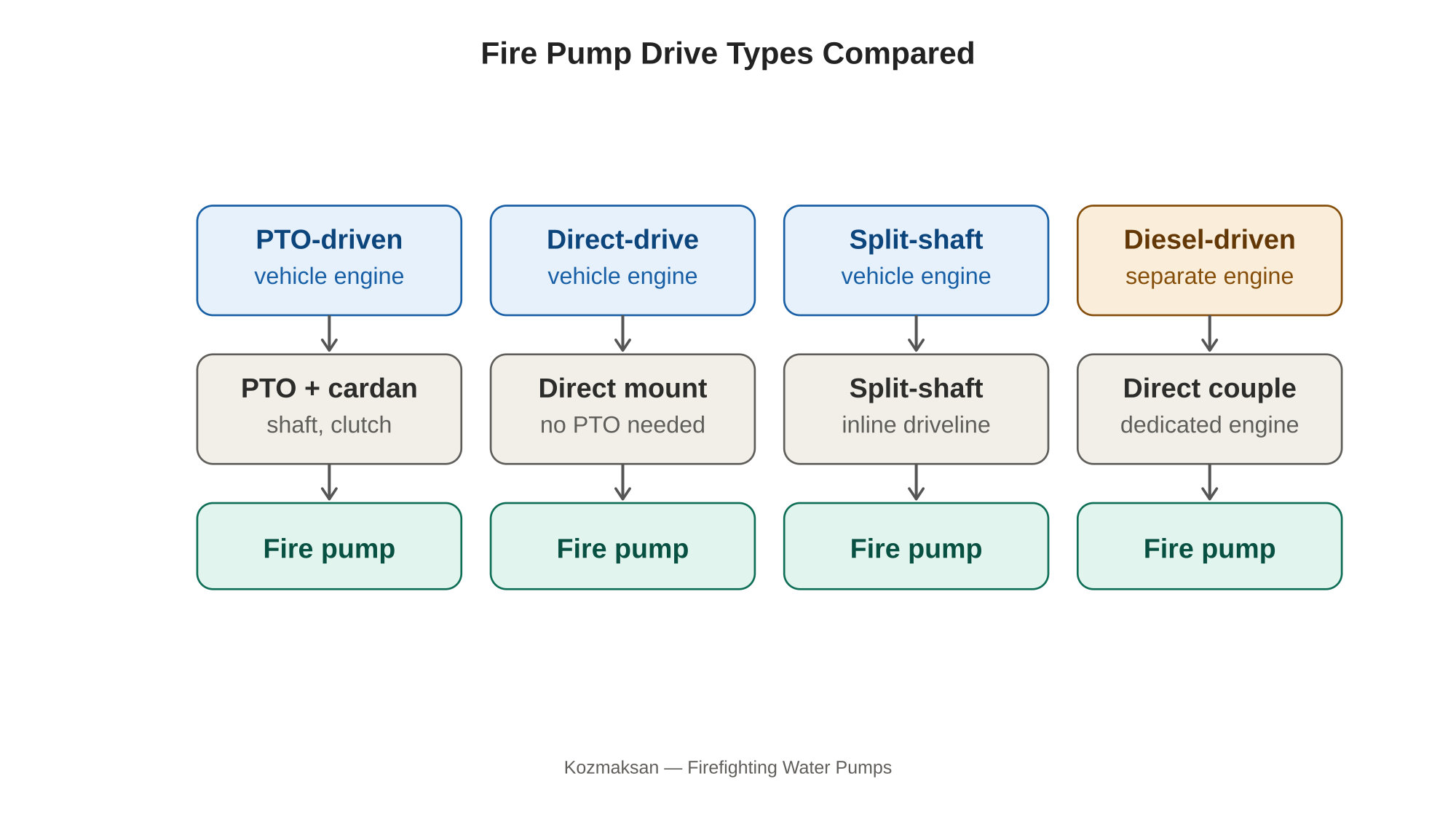
A vacuum blower is typically the first component in a pneumatic transmission line, drawing air (and vacuumed material) through a filter and cyclone separator before passing it through the blower, a switching valve, and a silencer before exhaust. The blower pump is housed on ball-bearings and mounted on a cast main body over a steel curvature chassis, driven either by belt-and-pulley or PTO connection.
How This Compares Across the Industry
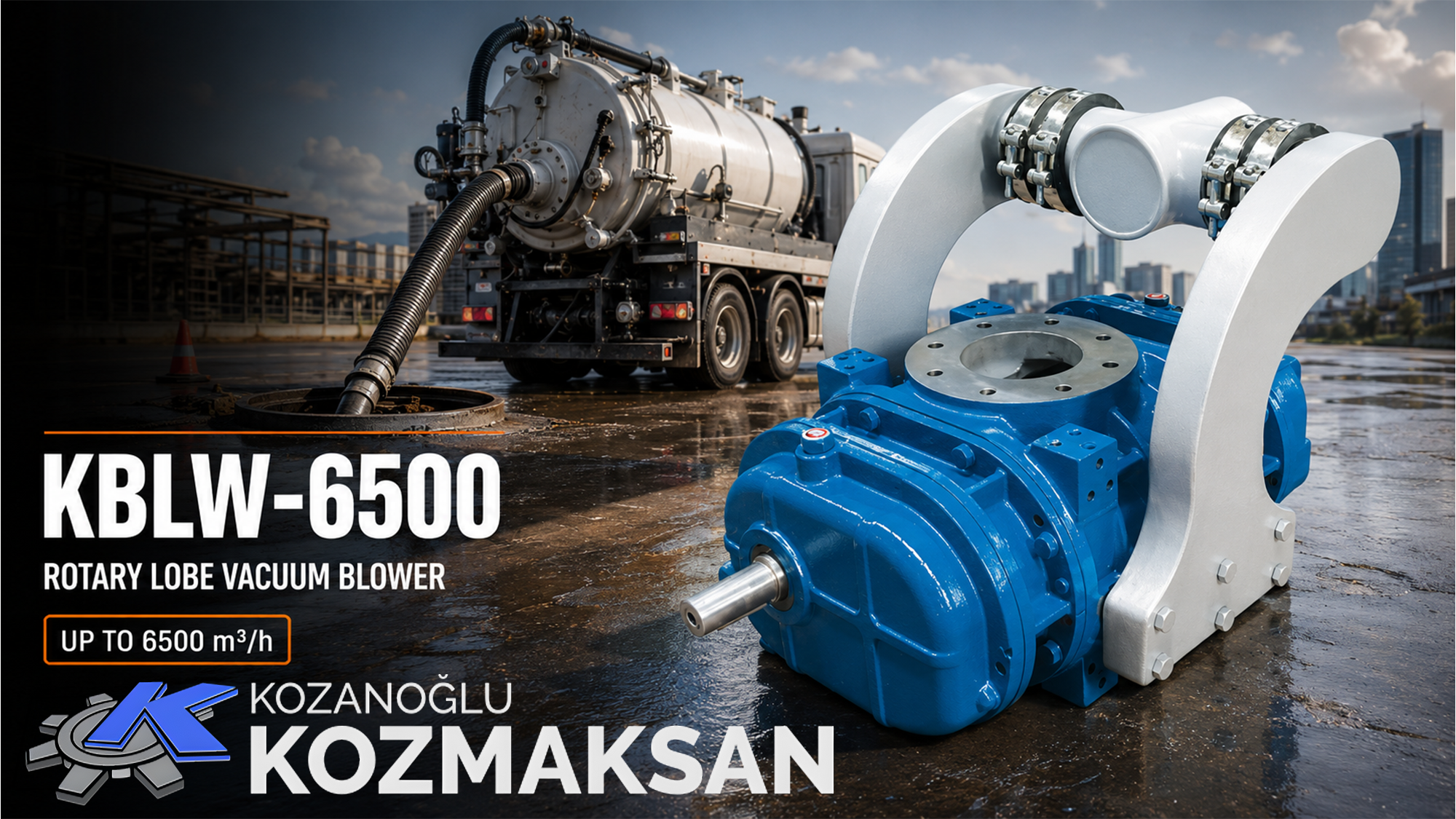
Robuschi, a long-established manufacturer of vacuum blowers for mobile truck applications, offers its RB-DV and TRB-DV series specifically for vacuum trucks handling wet and dry waste, with capacities reaching up to 10,500 m³/h. Kozmaksan's KBLW range spans a comparable capacity spectrum, from 958 m³/h at the compact end up to 6500 m³/h at the flagship KBLW-6500 — covering the same operational range used across the vacuum truck industry, from light-duty units to large industrial applications.
Kozmaksan's KBLW Range by Capacity
- KBLW-900 (up to 958 m³/h): Compact capacity for smaller vacuum units and lighter-duty pneumatic conveying applications.
- KBLW-1500 (up to 1650 m³/h): Mid-range capacity suited to standard vacuum trucks and general pneumatic transmission needs.
- KBLW-3000 (up to 3350 m³/h): Higher-capacity option for larger vacuum trucks and industrial pneumatic conveying systems.
- KBLW-4000 (up to 4160 m³/h): High-capacity blower for demanding vacuum and material transfer applications.
- KBLW-6500 (up to 6500 m³/h): Kozmaksan's flagship capacity, built for the largest industrial vacuum truck applications.
Factors Beyond Raw Capacity
- Drive type: Belt-and-pulley drive offers straightforward integration, while PTO-driven configurations — Kozmaksan's core engineering specialty — integrate directly with the vehicle's existing drivetrain.
- Vacuum percentage vs. flow rate: Blower flow rate decreases as vacuum percentage increases at a given rotation speed. Match your operating point to the actual application, not just the maximum rated capacity.
- Duty cycle: Continuous industrial operation calls for a blower sized with margin above your typical operating point, rather than one running at its rated maximum constantly.
Maintenance Built for Reliability
Every Kozmaksan blower follows a structured maintenance schedule: bolt and belt checks within the first 3 hours of operation, oil level checks within the first 25 hours, weekly filter inspections, and progressively spaced service intervals out to every 20,000 hours — keeping the blower running reliably across its full service life.
Explore Kozmaksan's full blower range: KBLW-900, KBLW-1500, KBLW-3000, KBLW-4000, and the flagship KBLW-6500.