
How Much Flow Capacity Does Your Fire Truck Pump Need? (1200-4000+ L/min Guide)
-slider535.jpg)
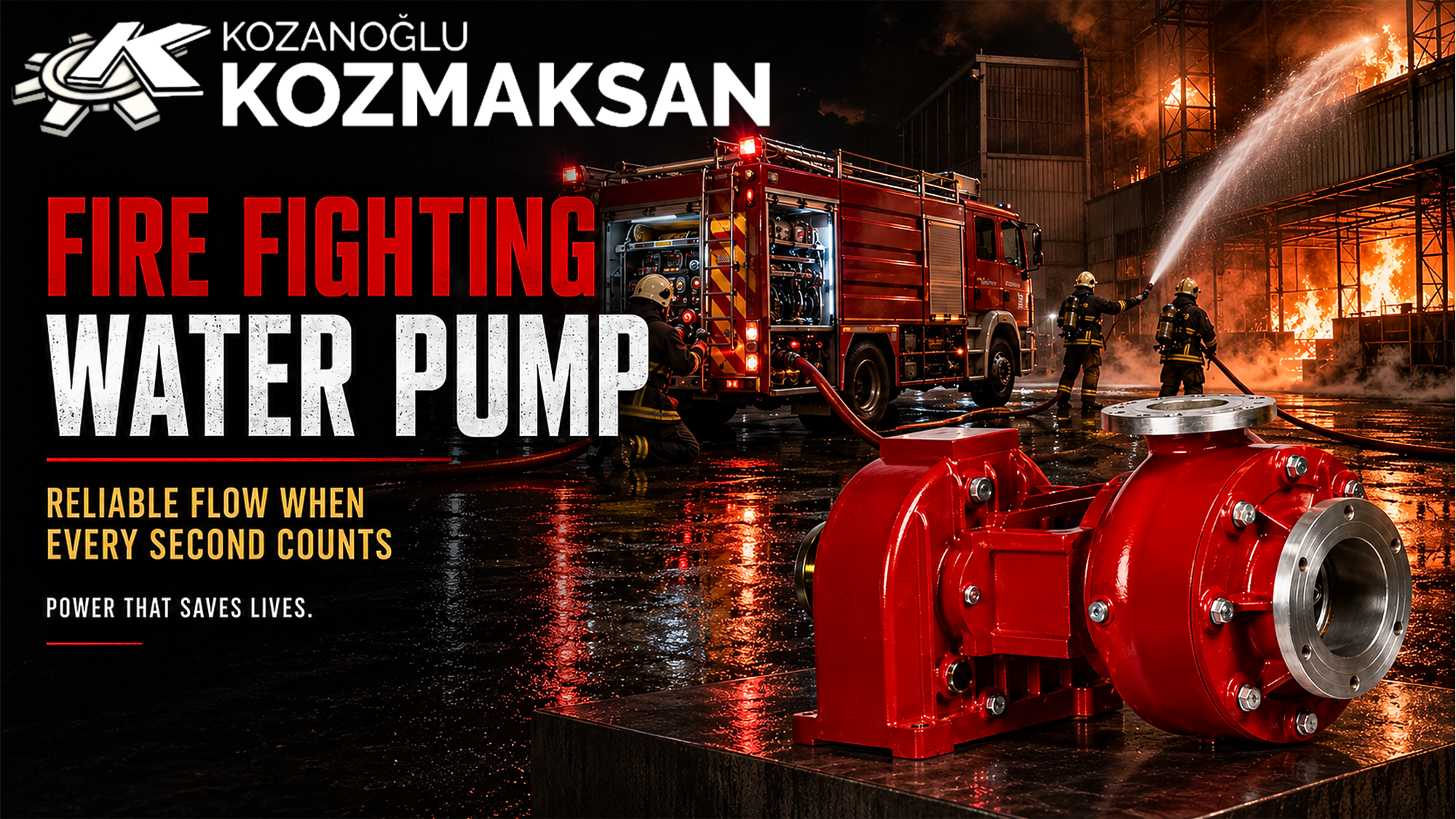
Fire truck water pumps span an enormous capacity range — from compact 1000 l/min pumps for rural trucks to flagship 4000+ l/min systems for major municipal and industrial apparatus. Choosing the right capacity affects everything from vehicle weight and cost to how effectively your crew can respond to different types of incidents. Here's a practical framework for matching pump capacity to your fleet's needs.
How the Industry Segments Capacity Classes
Rosenbauer, one of the world's largest fire apparatus manufacturers, structures its entire truck-mounted pump range around capacity tiers — offering EN1028-certified models at 10 bar output ranging from FPN 10-750 up to FPN 10-4000 and beyond, with rated outputs stretching from 750 l/min to over 5,500 l/min depending on the model. This tiered approach reflects a simple reality: no single pump size is right for every truck, and matching capacity to vehicle role is standard practice across the industry.
Choosing by Vehicle Role
- 1000-1200 l/min: Rural and lighter-duty trucks, municipal water trucks, and vehicles where compact size and lower weight matter more than maximum flow. Kozmaksan's SP-010-1200 fits this role with a single-stage design.
- 1500 l/min: The most common mid-range capacity for standard municipal pumper trucks. Kozmaksan offers this in three configurations: the two-stage SP-010-1500, the combined high-pressure SP-010-1500-040-250, and the automatic-priming SP-010-1500-V.
- 2000-3000 l/min: Larger municipal and industrial trucks needing higher volume, with the flexibility to trade flow for pressure. Kozmaksan's SP-10-2000-3000 covers this range, with an optional 40 bar combined high-pressure stage.
- 4000+ l/min: Flagship apparatus for major municipal, airport, and industrial fire protection where maximum water volume is the priority. Kozmaksan's SP-010-4000 matches the same 4000 l/min @ 10 bar capacity class as Waterous's HL400, one of the most widely deployed pumps of this size internationally.
Beyond Raw Capacity: Other Factors to Weigh
- Weight and space constraints: Larger-capacity pumps are generally heavier and require more mounting space — verify your chassis can accommodate the pump you're specifying.
- Single-stage vs. two-stage: As covered in our related guide, single-stage pumps are more efficient at or near rated capacity, while two-stage designs offer more flexibility between flow and pressure.
- Combined high-pressure needs: If your operations require booster reel capability, look for combined normal + high-pressure variants rather than a separate pump.
Want to understand the engineering behind flow-pressure trade-offs in more depth?
Read our related guides:
Normal Pressure vs. High Pressure Fire Truck Pumps